Tuesday, June 17, 2014
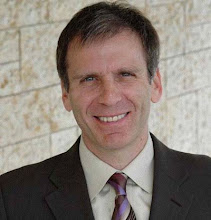
Introducing Cantor Richard Schwartz
Shalom! For over 20 years I've provided joy and holiness to wedding couples and their guests. My friendly, professional demeanor, ability to listen and respond to specific needs, and outstanding vocal talent are some of the reasons why couples choose to hire me as an officiant. Please give me a call at 310-895-6718 to learn about how I will help you fulfill your vision for the most special day of your lives.


Friday, April 10, 2009
On Intermarriage
The main consequence of marrying outside the Jewish religion, growing up in an observant community on Long Island, was made clear at an early age: disappointment. But for me, as a young adult, this was not enough of a incentive to stay away from non-Jewish women. There was something alluring about it, much more than cheeseburgers. However, my background held sway: intermarriage was not something I would embrace for myself.
When I first became a cantor, the question of whether or not to officiate at intermarriages didn’t arise. It’s only been in the last five years that I’ve had to make choices about it. To what extent was I comfortable officiating? What were my criteria? Did the non-Jewish partner need to commit to living a Jewish life? Having been certified first by the Conservative and then by the Reform movement factored in to this as well.
So I experimented. Most often the non-Jewish partner had no religious conviction and was supportive of the Jewish partner’s choice to have a cantor officiate. As one who is interested in supporting positive Jewish life, I enjoyed this opportunity. But about a year ago I faced a more difficult choice: to co-officiate with a priest for a couple whose non-Jewish partner was deeply committed to Catholicism. I chose to go for it.
As you can guess, it was a wonderful experience. What swayed me was the degree of respect and love that the couple had not only for one another but also for their respective spiritual journeys. It also made a difference to learn that they were so close to their families and that their families were supportive of their choice. I enjoyed officiating with the priest, too. His personal style and approach to the liturgy was interesting and delightful, too.
For me the question I ask is how open and respectful are the couple toward their differing religions and have they considered how they will proceed as a couple and (perhaps) as a family of mixed religions. Also of consideration is whether or not their extended family is supportive, and how can I be of service to guide them should they need help bringing both sides together.
In the case where one partner is Jewish and the other is not but has no other religion I ask the couple if their intention is to live as a Jewish couple and (possibly) family. If so, I offer my guidance in directing them as they grow together finding their new identity as a Jewish couple.
All couples are blessed and all couples are beautiful. I invite you to enjoy the spiritual feelings, connection to your ancestors, and all the celebration that a Jewish wedding offers.
When I first became a cantor, the question of whether or not to officiate at intermarriages didn’t arise. It’s only been in the last five years that I’ve had to make choices about it. To what extent was I comfortable officiating? What were my criteria? Did the non-Jewish partner need to commit to living a Jewish life? Having been certified first by the Conservative and then by the Reform movement factored in to this as well.
So I experimented. Most often the non-Jewish partner had no religious conviction and was supportive of the Jewish partner’s choice to have a cantor officiate. As one who is interested in supporting positive Jewish life, I enjoyed this opportunity. But about a year ago I faced a more difficult choice: to co-officiate with a priest for a couple whose non-Jewish partner was deeply committed to Catholicism. I chose to go for it.
As you can guess, it was a wonderful experience. What swayed me was the degree of respect and love that the couple had not only for one another but also for their respective spiritual journeys. It also made a difference to learn that they were so close to their families and that their families were supportive of their choice. I enjoyed officiating with the priest, too. His personal style and approach to the liturgy was interesting and delightful, too.
For me the question I ask is how open and respectful are the couple toward their differing religions and have they considered how they will proceed as a couple and (perhaps) as a family of mixed religions. Also of consideration is whether or not their extended family is supportive, and how can I be of service to guide them should they need help bringing both sides together.
In the case where one partner is Jewish and the other is not but has no other religion I ask the couple if their intention is to live as a Jewish couple and (possibly) family. If so, I offer my guidance in directing them as they grow together finding their new identity as a Jewish couple.
All couples are blessed and all couples are beautiful. I invite you to enjoy the spiritual feelings, connection to your ancestors, and all the celebration that a Jewish wedding offers.
Commitment as An Officiant
My commitment as an officiant is to create a space of warmth, sanctity, beauty, and joy for couples and their guests. As I get to know you I will gain a clear sense of what will touch and inspire you most during the ceremony. My intention is that the total experience of our work together deepens your connection to one another and inspires you to honor the commitments you will make for the rest of your lives.
Monday, October 20, 2008
Why a Cantor?
The main reason is song!
From the opening song of welcome to the final offering of blessing, my singing adds a dimension of warmth, connection, and inspiration that can not be felt through words alone. I'm also an excellent guitarist with a large repertoire of songs in English, Hebrew, and Yiddish and with enough lead time I can prepare your favorite song, as well. Please contact me if you would like me to send you a sample of my singing voice and style.
In case you didn't know, invested cantors are fully authorized to officiate religious and civic wedding ceremonies.
Monday, October 13, 2008
Getting to Know You- Lead up to the Ceremony
After you've chosen to work with me, we will meet a minimum of three times. Our first meeting is for you to share the story of your love: who you are and how you found one another. I will learn about your families, your commitments as individuals and as a couple, and about your faith. And I will learn about your vision for the ceremony of your dreams. Our second meeting focuses on the details of the ceremony itself. We review the basic structure of a Jewish ceremony, further explore your vision, and work together to construct a format that satisfies your needs and desires. If it is an interfaith wedding, we fashion a plan that celebrates you or your partner's religious faith and/or family-specific traditions. Our final meeting takes place at the wedding site itself and will most likely coincide with your dress rehearsal. We review the details of the ceremony, of course, and I will support you in relaxing. Throughout the process, we communicate by phone or e-mail to review details and for you to express any concerns. My pleasure!
Monday, June 16, 2008
Gay and Lesbian Jewish Weddings
It's a remarkable time in human history and one that presents a precious opportunity for gay and lesbian couples to legally express their love for, and commitment to one another. As a cantor who has officiated at so many beautiful and meaningful ceremonies for the past 20 years, I would be honored to bring spirituality and joy to your upcoming celebration. My intention is to meet at least three times with couples: first to get to know you; second, to review the details of the ceremony itself; third, to finalize the details and/or rehearse the ceremony. Please call or write to me to learn more. Standing beneath the Huppah is often the most holy and joyous moment in a person's life. My overriding objective is to help you both feel calm and connected to one another throughout the process so that you can be present to the experience of holiness and joy. Feel free to drop me a line at R.J.Schwartz@sbcglobal.net or call at 310-838-8338
Subscribe to:
Posts (Atom)